Monrovia- At the February A. D. 2022 Term of the opening ceremony of the Criminal Courts in Liberia, Chief Justice Francis Saye Korkpor Sr., “let the cat out of the bag”—“You will not see me again as Chief Justice after September 5, 2022.” A brief silence ensued, and then it was interrupted by a cascade of murmuring, but in the end, everyone suddenly wore a toothpaste smile to greet the news. Some said this was overdue; others said, it’s better late than never; while there were people who simply shrugged and puffed off the news with a cling of fist to suggest that the long-awaited moment was at hand.
I was startled and slightly upset at their effrontery and callous disregard for the age of the man, his service to his country, his towering image, and immaculate experience, but knowing what Liberians are, and can do to one another; it was not difficult for me to understand their reactions. Sadly, this is what Liberia is and will be in my generation—disrespect for public officials at whatever price! Chief Justice Korkpor has come a long way—a countryman by birth from northeastern Nimba County, a Catholic by faith, a family man, a teacher, a former Warden at the Monrovia Central Prison (MCP), a practicing lawyer par excellence, and now-soon-to-be former “Chief Justice”—he is perhaps one of only two Chief Justices in Liberian juridical history to have sworn-in and witnessed a peaceful democratic transfer of power since 1944.
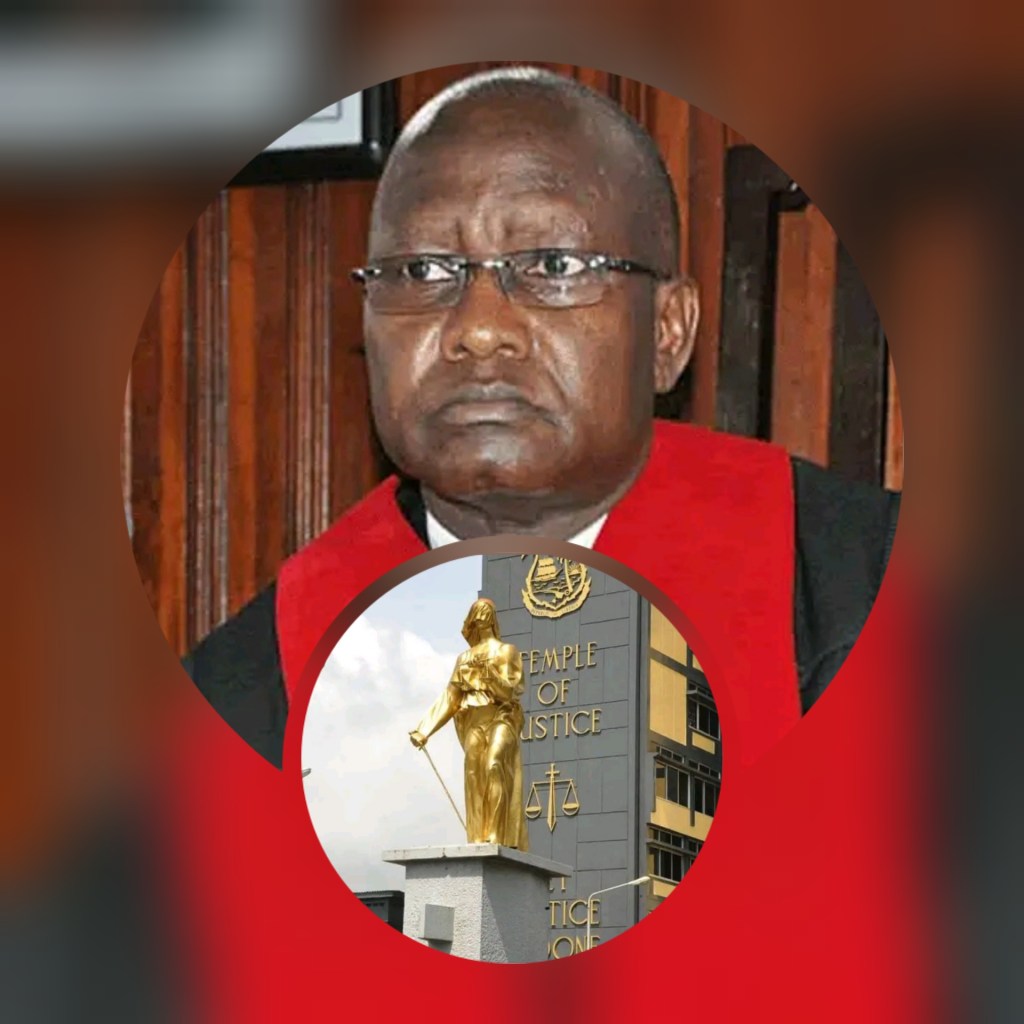
For a man who used to issuing judicial canons and ordering people to obey whatever he says and does, by the authority of his “gavel,” one cannot help but imagine how lonely he would be on his first day in private life on September 6, 2022. His trek to the public spotlight has been full of thorns and bristles, and with experience and wisdom openly seen and felt in all of his actions in recent years, the age limit of 70, set for judges and justices for retirement under the 1986 Constitution has begun to ring bells around him everywhere he turns.
Whatever the case, his time is out; September 5, 2022, is lurking, but his image will loom large for a brief period highlighting his absence and this could trigger or beckon some relief as it is with all mortal beings— all those who envied and hated him will surely celebrate his retirement with few bottles of beer here and there, but in truth, his sway was one of highs and lows, and in most instances, he saw himself in the firing line, with the reputation of the court at stake; however, he kept a strong balance between parochialism and liberalism and navigated the court in turbulent storms towards an even keel. The political crisis the 2017 general and presidential elections generated and the impeachment trial of Associate Justice Kabineh Mohammed Ja’neh are just a few of the events that he perfectly controlled through the rule of law.
Chief Justice Korkpor may not have been and certainly wasn’t the ‘darling’ of everyone, and most times, stood or was conspicuously silent on a number of critical issues, but in all fairness, he was frank, brutal, open-minded, and succeeded in elevating the court on the altar of trust and respect far beyond the bounds of politics. Looking somewhat reclusive at first sight, and then flexible when confronted, Chief Justice Korkpor has been able to cleverly combine his persuasive and soft-talking skills with a sense of genius in wooing his peers to arrive at unanimous decision or conclusions in some of the most difficult and controversial Supreme Court’s opinions, and has incredibly succeeded in narrowing a flurry of dissents which could have obfuscated most rulings and judgments on a number of critical constitutional issues that have been filed before the court.
Truly, he will not be remembered for the many tears his bench has caused party litigants in many of its rulings and judgments, especially on real property issues, but he will be remembered and perhaps revered for his agility to counterbalance his emotions against unprovoked attacks, vilifications, and profanities directed at the court most times by politicians or political activists; his firm position on the rule of law, his unbridled commitment to stay the course in these trying times; his firmness of purpose to always call “a spade a spade” no matter whose interest is involved, maybe the only company that he will always recite.
Replacing Chief Justice Korkpor with someone who understands the inner workings of the court is not as simple as it may seem—it will require taking a sober reflection not just of the candidate’s ability but his temperate to withstand pressure –it will require reading through the quality and experience of a lawyer far beyond the mere acquisition of degrees or years of practice. The Supreme Court of Liberia whether within or without needs a “Chief Justice”
 MONROVIA LATEST NEWS