Monrovia- May 30, 2022: The Deputy Governor for Economic Policy at the Central Bank of Liberia (CBL) Dr. Musa Dukuly, said mortgage financing plays a key role in the
growth of the overall economy and expansion of the banking sector in Liberia.
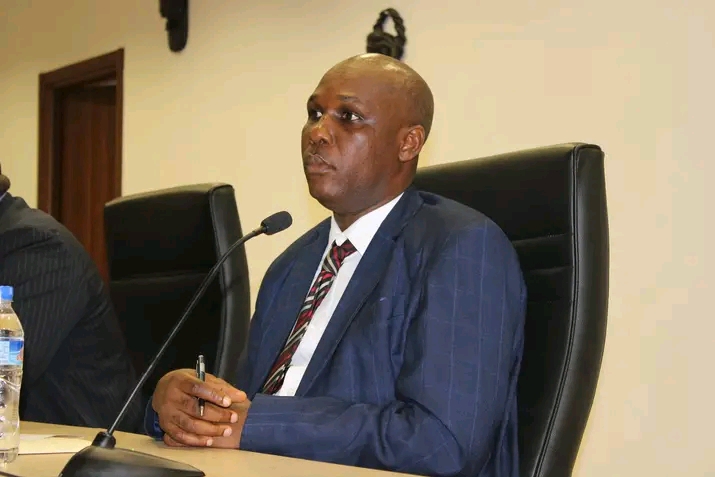
Dr. Dukuly made the statement on Thursday, May 26, 2022, at a one-day stakeholders’ conference organized by the National Housing Authority (NHA) held at the Ellen Johnson Sirleaf Ministerial Complex in Congo Town.
The Deputy CBL Governor said mortgage financing can essentially facilitate decentralization, increase urbanization, augment liquidity, improve access to information and create other economic opportunities.
“Liberia needs sustainable financing to cultivate the real potential of the mortgage market,” Dr. Dukuly said.
He said lending activities in the mortgage sector, like all specialized lending activities in Liberia, are very low when compared to sectors like trade, and household services, amongst others.
The Liberian Senior economist mentioned that of the total banking sector credits of US$455 million at the end of December 2021, construction, of which mortgage is a sub-sector, constituted 9.8 percent, US$44.5 million with most of this amount reflective of investment in road construction.
He stressed that the actual mortgage financing directed at housing ckkml99kojkklouolohljoopu8oo77o7o7oooo66oooooolllllolould be negligible on account of limited financial institutions involved with housing financing.
However, Dr. Dukuly admitted that implementing successful mortgage financing in Liberia is not a one-year or three investment. He said it is ten or more years of investment.
“The growth of the mortgage market is driven by economic factors such as confidence in mortgage facilities, the magnitude of interest rates and macroeconomic environment, the direction of supply and demand of housing units as well as demographic factors such as population growth rate and rural-urban migration rates.
He pointed out that research has shown that the predominant influence of household income, money market effectiveness, housing market, and mortgage market participants influenced the dynamics of mortgage loans.
Dr. Dukuly mentioned that mortgage is significantly anchored on available long-term loanable funds through equity, deposits, or guarantee funds.
He disclosed that in Liberia, the mortgage market is underdeveloped compared to other developing countries, adding the loan stock for mortgages to the Gross Domestic Product (GDP) is less than 0.5 percent, which indicates the low availability of loans to support mortgage financing in Liberia.
The CBL Deputy Governor called on stakeholders at the housing conference to avail themselves of a comprehensive assessment of the Liberian mortgage market and scope of financing.
He said most financial institutions in the country do not have strong balance sheets for mortgage financing that account for long-term financing with affordable interest rate.
However, he identified several constraints inhibiting lending to the mortgage sector in Liberia.
Dr. Dukuly added that deposits and equity are critical for supporting mortgage business targets and growth ambition noting, that it is not just about the marginal returns on the mortgage investment, but the availability of long financial resources.
He revealed that about 74% of the banks’ funding in Liberia falls within the time bucket of 3 months and below which is highly dominated by demand deposits, accounting for 42% of total funding.
The senior economist further added that for loans and advances, 73% of the total loans and overdrafts have maturity below one year and 25% have a maturity between 1 to 3 years.
“These statistics reinforce the need to address the huge gap for long-term financing in Liberia as the country contemplates a strategy of economic diversification,” Dr. Dukuly stressed.
Additionally, the Deputy CBL boss identified limited private entities in mortgage financing and the issue of the collateral sale in the secondary market as problems stalling the mortgage market in Liberia.
Dr. Dukuly cautioned the Government of Liberia to explore means of restructuring the mandate of the housing bank and transform the NHA and Saving Bank into the National Mortgage and Saving Bank so that the scope of its financing can go beyond housing to other immovable properties.
He also wants the Government to develop progressive budgetary allocation for the mortgage and diaspora savings while building confidence issues in the mortgage market.
Dr. Dukuly said the CBL believes that when key sectors of the economy are supported, there would be an immense benefit towards attained price stability and other macroeconomic objectives.
During the 1970s and 1980s, the Government of Liberia through the National Housing Authority (NHA) guaranteed and secured mortgage for low-income earners, most of which were civil servants.
The Government constructed various housing estates including the Matadi Estate, Stephen A. Tolbert Estates, Barnesville Estate, and New Georgia Estate amongst others.
 MONROVIA LATEST NEWS