Monrovia, Liberia – October 31, 2021: As the new academic year begins this November, the Ministry of Education (MoE) over the weekend climaxed a month-long residential training for over 900 in-service teachers and principals from 11 counties. The training was done with support from the Global Partnership for Education (GPE). Liberia’s perennial problem of unqualified teachers is fast becoming a history. It is an open secret that Liberia’s education sector faces numerous challenges including inadequately trained and inequitable distribution of teachers, but tangible efforts are being to address the challenge.
According to the 2017 MoE Teacher Verification and Testing report, 40 percent of primary school teachers do not possess the minimum required knowledge of English needed to be an effective instructor at the primary level. The distribution of qualified teachers in Liberia is also inequitable, with some regions having economic advantage and also getting more, and higher qualified teachers.
The GPE-funded Getting to Best in Education Project (G2B) was launched in 2018 to among other critical needs, address the problem of teachers especially in six disadvantaged counties (Bomi, Rivercess, Sinoe, Grand Kru, Maryland, and River Gee). As a target, the Ministry of Education (MoE) is to ensure 60% of ECE and primary teachers are qualified in the project intervention counties over four years from a baseline of 45.77%. The MoE has already overachieved this target as at end of year 3 (June 30, 2021) of the project. According to an independent verification report, the proportion of qualified ECE and primary teachers in the six targeted counties has reached 69%.
Meanwhile, qualification as defined by the Government is a teacher possessing a minimum of C-certificate for the ECE or primary grade level he or she teaches. The in-service programs are offered over the course of the academic year and include semester breaks for a duration of approximately one year. The In-service C-Certificate training programs for School principals, primary and ECE teachers are modelled on the Ministry’s existing C-Certificate teacher training program but is designed to be completed without requiring principals and teachers to miss school days.
Accordingly, each training program involves a total of 900 clock hours, 300 in person with Master Trainers and 600 school leaders or teachers practice hours.
However, in January and February 2021, the MoE with support from external training service providers trained and certificated 395 principals, 185 primary teachers and 184 ECE teacher from the six targeted disadvantage as the first cohort of 700 unqualified ECE teachers, 700 unqualified primary teachers and 1,500 principals who have never been trained in school leadership and management.
Additionally, during the first cohort, the service providers built the capacities of master trainers and administrators of the three Rural Teacher Training Institutes (RTTIs) to deliver on these training programs going forward. The RTTIs include Kakata Rural Teacher Training Institute (KRTTI), Webbo Rural Teacher Training Institute (WRTTI), and Zorzor Rural Teacher Training Institute (ZRTTI).
Henceforth, the programs have now transitioned to the RTTIs and this academic year 2021/2022 marks the second cohort that is being squarely implemented by the RTTIs under the supervision of the Ministry of Education.
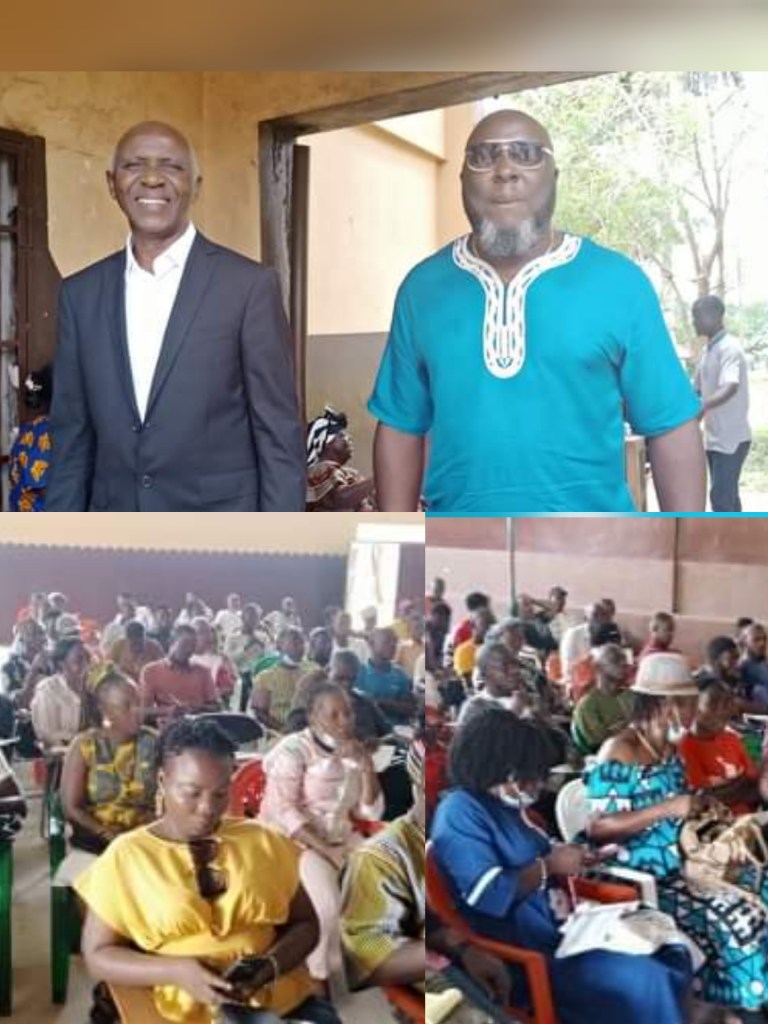
Moreover, the first residential training for the second cohort was conducted October 4- 29, 2021 at KRTTI, WRTTI and ZRTTI simultaneously. Overall, 909 teachers and principals (26% female) participated from 12 counties (including the original 6 disadvantaged counties and 6 new counties). The counties are Bomi, Margibi, Grand Bassa, Montserrado, Rivercess, Sinoe, Grand Kru, Maryland, River Gee, Nimba, Bong and Lofa.
The gender disaggregated data at the ECE and principal levels are encouraging but there remains a need for more female involvement in training activities. Over 47% of the ECE teacher trainees are females while 24.3% of principals who enrolled in the school leadership and management program are females.
The primary training program has the least representation of females (about 10%). Except for primary training, the ECE and principal training programs saw an increase in female participation from the first cohort.
Generally, there are limited numbers of teachers and principals in public schools in Liberia. Available data suggest that less than 30% of public schools’ teachers are females.This number is even lower when it comes to principals. The principal training covered 8 modules including the following topics: Enabling Environment, Leading and Managing Schools, Teaching and Learning Materials, Instruction and On-Site Supervision, Partnership and Collaboration, Ethical Leadership, Effective School Leaders, and Self-study and reflection.
For the Primary and ECE programs, the training covered foundations, child development, ECD STEPS 1-8, ECD and primary pedagogy and contents, and teaching practices.This residential training will be followed by a monthly cluster training and a second residential training during the academic year.
The overarching goal of the G2B project training is to equip teachers (ECE & Primary levels) and principals with the requisite knowledge, skills and attitudes to enable them to effectively teach and lead schools at various levels. With this, teachers and school leaders graduating with C certificate in Early Childhood Education, Primary Education and School leadership, will be able to effectively plan, implement and assess instructional and operational activities of their schools.
Trainees are expected to sit and pass final assessment test before they can be certificated. Despite the constrained fiscal environment and challenges associated with these training programs, the RTTIs were able to successfully conduct this first cohort. As Directors of the three RTTIs noted, the various institutions are challenged in many ways.
According to the Directors, Maintenance costs of the RTTIs are high coupled with limited logistical support, so the project is not expected to serve as the only solution to these existing problems. “The Government is making frantic effort to find a sustainable solution to our problem under the leadership of Professor D. Ansu Sonii, Sr”.The trainees themselves were full of praises for the manner and form in which the trainings were conducted.
“The training was educative and the manuals were very rich. I was able to understand my modules particularly module 2 (Leading and Managing Schools), which I think will help me a lot in working with the community and other colleagues at the school as it relates to leadership”.Principal Anneta L. Taylor – Sackie Gbomoh Public School Bong Mines Road, Margibi County“The training was very educative, and we thank God for our trainers because they really helped us to understand the lessons the easiest way. l also want to ask that this training be spread all over the country so that others that were not opportune to benefit will be able to benefit and our children will be taught the proper way”.
In the same vein, teacher Benjamin D. Tarr – Chippy Memorial Public School, Grand Bassa County “ stated that the training was very good. We learned a lot of things that we never knew. We had very good trainers that made us grab every topic and skills in planning a lesson. Using the teacher planners help us greatly to understand integration and procedures. We were also taught how to make our own copybooks as ECE teachers”.
Speaking during the program, teacher Cynthia H. Tarr – Jenneh Public School, Bomi County“The training was fine. We did all the four courses. We did foundations and classroom management. Our teachers did extremely well with the presentation and made us to understand each of the topics that were taught. The trainers also gave us many learning materials. Teacher Akin Z. Beggs – Tompoe Pub School, Rivercess added.
The training activities are part of the Liberia Getting to Best in Education (G2B) Project implementation, which includes increasing access to and quality of ECE through school grants provision and provision of community-based ECE services; School Quality Standards, monitoring and inspection; and achieving better learning through improved equity, efficiency, and accountability. The G2B is a 4-year project which became effective on June 25, 2018. The World Bank is the supervising entity and serves as Grant provider.
The Ministry wants to thank the Government of Liberia under the leadership of His Excellency Dr. George M. Weah for keeping its promise of a better education system evidenced by the continued support to the sector. The Ministry is also grateful to its partners, especially the World Bank for the support. We know we are not there yet, but there are positive signs that we are getting there. Our appreciation goes to the Senior Management Team of the MoE, our master trainers and directors of the RTTIs, and the G2B Project Delivery Team for the worthwhile initiative.
 MONROVIA LATEST NEWS